Sunday, June 5, 2016

Failure Is A Myth

Failure implies finality - you determine when something ends.


Failure is a myth; quitting is real.


Quitting always ends things.


Falling flat, coming up short, making mistakes - these are not endings, these are events you get to choose how to respond to.


As long as you are trying in earnest you are not failing.


You either succeed or you keep trying, but failure only becomes real when it is acknowledged by giving up.


Effort paves the road to success.

Saturday, June 4, 2016

The 3 C’s of Juggling Projects

Collaborate

The first trick to juggling projects is collaboration. This enables you to jump from project to project without losing momentum on any of them. Momentum is everything when it comes to seeing a project through to completion, so this is absolutely vital.
With that said, having no partner is better than having a bad partner. Choice carefully those you work with. Find someone who compliments your strengths and is skilled in the areas you are weak in.


Compartmentalize

Separate your projects. Block out your schedule and devote a certain amount of time to each. This will keep your mind sharp as you dissect the problems you have to solve. This is also another reason why collaboration is crucial - it lets you transition and focus on the task at hand because your partner is still stirring the pot.


Chip away

Assess what your long and short-term projects are. Do this by looking at them through multiple criteria. What projects require the most hours to complete? What are your hard deadlines? Which are your best opportunities in the present? If you don’t capitalize now, which chance will slip away or what connection might you lose touch with?

The longterm projects lack the immediate gratification, but even if you have to put them on the back burner in favor of the short-term projects, just continue to chip away. Remain consistent above all.

Friday, June 3, 2016

How to Survive as an Artist Working a “Real Job”

1 - Be selective about your work (if you can afford to be)

You have to pay your bills, but your time is valuable too. Consider whether or not your job gives you the flexibility to work on your art during your free time.


2 - Does your job drain you?

Only you can answer this. I’ve worked certain jobs that have left me feeling discouraged or empty at the end of the day, and I’ve struggled afterwards to manage to write a paragraph. I had the time, so that wasn’t the issue, but my creative energy was dissipating.


3 - Don’t make excuses

The moment you begin to believe you are too busy to create is the moment you’ve given up. There’s always time. You just have to find it or make it. If you only have half an hour each day to devote to your art use it wisely. Cut out the unnecessary. You don’t need TV, you don’t need video games, you don’t need YouTube videos, or much of anything at all, but if you’re an artist you need to create. Just do it.


4 - Are you moving closer to your dreams or diluting your energy?

Can you realistically see yourself getting ahead? If you aren’t creating in your spare time, you’ll be in a perpetual loop working to make someone else’s dreams come true.


5 - Create finished products

If you’re working in finance, but you want to be a screenwriter, write a script and shop it around in the time you aren’t working. Begin doing the thing you want to do. If you want to be a painter, make paintings. If you want to be a novelist, write a novel. Life is a verb - it’s all about action.

Thursday, June 2, 2016

Redefining Love

Defining love is nearly impossible. To find a definition everyone agrees on is about as subjective as asking someone to define happiness - we have a general understanding of what it is, but the words we’d put it in are deeply personal.

What we do agree on is that there are many types of love and a range of intensities we feel. To attempt to find an encompassing definition that can fit the varieties and intensities of love we have to make it simple.

The definition I’m going to propose does not fit all contexts. If you apply it to marriage I’m not sure it’ll be a happy one, but this particular definition is honest and true because it’s rooted in the present. If you have to remind yourself why you love someone it could be argued that in lapse you were momentarily out of love. We often equate love with stability, and choice, so we think our way through these lapses for relationships to succeed. That kind of love is more like thoughtfulness and caring. An alternative is to equate love with truth - not truth directed towards another, but being true to yourself. 

If we don’t twist the definition of love to suit us pragmatically for the sake of our relationship’s longevity or for a socially practical definition then we can uncover its meaning. Think back to when you’ve been “in love." Forget happy endings or rewriting the narrative with an asterisk if it didn't work out - it was real - you thought about that person throughout the day and you cherished them - you were overwhelmed with feelings, overwhelmed by the thought of that person, and sometimes you didn’t know what to do with it.
This might sound like passion, so you can dismiss it if you’d like, but then is it worth its weight without a bit of madness?

Love is reverie with a dash of delirium.

Wednesday, June 1, 2016

The Problem with our Educational System

You’ve heard it before - teach students to learn. 
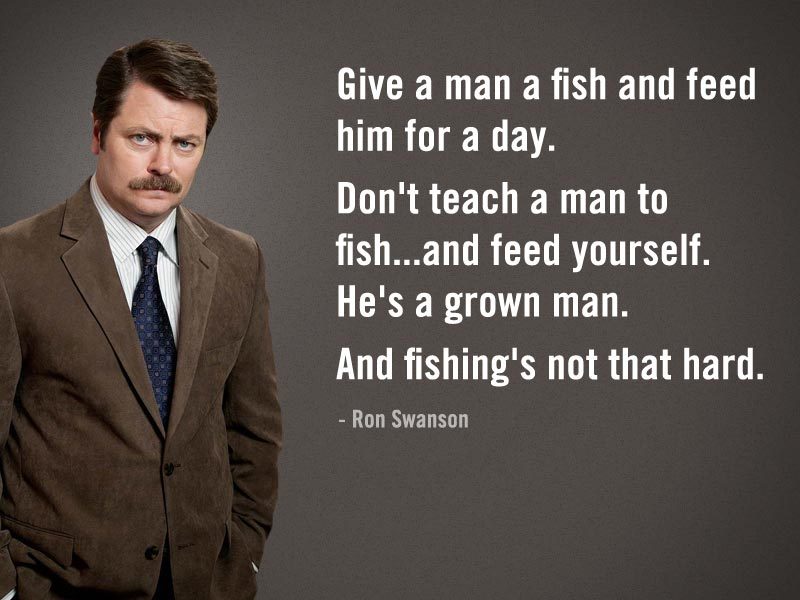
The implication is that it’s the educational equivalent of “Give a man a fish, he’ll eat for a day; teach him how to fish, he’ll eat forever.” The idea being that the student is empowered to learn anything. This is a simple concept. However, the current structure the educational system is at odds with this philosophy.

Students are constantly being told their performance on standardized testing is indicative of their work ethic and, maybe less verbalized, their intelligence as well. Students prepare for these tests, memorize the types of answers they’ll regurgitate, show up, and jot them down…without actually learning anything that will be useful beyond trivia.

As long as students can succeed on formulaic thinking alone they have no reason to adjust. In order to teach students how to think, a teacher must force them to adapt - the student has to start asking his or herself, “How did I learn this?” If they can get by recalling merely what they learned then the teacher is not a teacher, but rather, a standardized performance supervisor. That sounds like a robot, right? It might as well be.

As a student I loved multiple choice and short answers because it was easy, but again, that’s only useful for trivia. Get your students to explain, and make the time to show them in return why their answer isn’t necessarily just right or wrong. 


Reward students for thinking - be an encourager and their passion for learning will grow exponentially. The problem with the US educational system is that we measure by test scores instead of student engagement and their love of learning. If we valued that above all else, the results will follow.

The Millennial Secret

Bill Gates has one of my favorite quotes -

“I choose a lazy person to do a hard job because a lazy person will find an easy way to do it.”

Older generations often view millennials as lazy. While I’m not ready to dismiss that notion entirely (I’ve seen it to and I’ve been it before), I’d argue that this quote is relevant to millennials and baby boomers trying to understand millennials because we are a generation obsessed with shortcuts. The result of this “laziness” is innovation. I’m not advocating or defending laziness in its true form, but my generation’s desire to find shortcuts will continue to lead to innovation in science, tech, and industry as we overtake the boomers as the generation who determines the next chapter of our history.

Much of this obsession with easier methods stems from growing up in the digital age. Machines are designed to make work more efficient; technology does the same for simplifying mental tasks. Millennials have grown up in a system of shortcuts enabled by and through technology, so that thinking is trained and reinforced by the age we live in.

Often, however, looking for shortcuts, which should be thought of as efficiency or divergent thinking, is instead mistaken for laziness. Sometimes laziness is laziness and it’s fair to call it what it is, but consider that shortcuts aren’t always such a bad thing. Catch yourself next time you scoff at the millennial idealism or the desire to “change the world” - don’t look at it as a reflection of narcissism, but as my generation feeling empowered by a system of increasing efficiency. 


Our full on embrace of shortcuts can appear to be a show of disdain for tradition and rules. It’s not. We crave innovation. Millennials are multi-tasking (at times distracted), efficiency-driven, divergents.

The Power of Omitting Coincidence From Your Language

We’ve all had those moments when it seems like everything is connecting or converging to a single point. It can even be unsettling how precise and well-timed certain things unfold - and yet, they do.
But It’s after they do, our first inclination is to think or say something along the lines of “What a funny coincidence” and chalk it up to that.

Instead, pay attention. Try to understand why things are playing out the way they are and how you can guide that energy. To dismiss it as coincidence is to ignore your own ability to converse with the universe. If you don’t buy into this, at least consider that it’s wasting potential and inefficient to lose track of the way your life’s energy is flowing.


You are traveling through your own life blinded skepticism if you let it cloud your intuition. Let those things you used to call coincidence point you in the right direction when you come to a crossroads.

Monday, May 30, 2016

Activating the Why Not Me? Mindset

Throughout my life I’ve been surrounded by encouragers and discouragers. Sometimes we aren’t conscious of which ones we are listening to - especially if the biggest discourager is yourself. 
Fortunately, I’ve had more encouragers than haters, but for years the critic in me refused to accept their love and support.
My utter lack of positive self talk led me to believe that I didn’t have worth - that I was just basically draining every one around me and wasting their time. I started losing consciousness in my life and my inner critic sabotaged me whenever I was reaching towards success. 
Then I stopped listening. A question popped into my head -
Why not me?
Now, I strive towards clear objectives and goals every day, and I get to be proud of who I’ve become.
What’s holding you back? What’s stopping you from coming up with the next big thing or from changing the world, even if it’s just in your immediate sphere? 

Just start asking, Why not me?

I promise it will change you forever.

Wednesday, May 25, 2016

The Virtue of Being A Rolling Stone

My dad loves the Rolling Stones. He loves their energy, their passion, their endurance – over fifty years performing but what he loves the most is how raw they sound after all this time.
Mick Jagger doesn’t exactly have a classically beautiful voice and he dances like a chicken, but everything he does is dripping with heart and soul.
When my dad is trying to make a point about going full force after a goal or pursuing a dream, he references Mick Jagger and the Stones.
People are drawn to truth and vulnerability. It’s not about hitting all the right notes. It’s not even about having perfect rhythm. It’s just about making people feel something deeply – this applies to anything – business, art, relationships – truth resonates.

True passion (which the artist and creator knows behind closed doors is obsession) is an emotion everyone wants to feel – it’s enchanting, it’s magnetic, it’s electrifying – there’s magic in putting it all out there for everyone to see.

Sunday, April 17, 2016

If You’re Thinking of Moving to Los Angeles…

You need to know some things about the city first.
You’re going to love it, and hate it. You’re going to feel crowded and alone at once. You’ll feel like everything you’ve dreamed of is within reach, and yet, at times, you’ll also feel like it’s all as distant as the stars. You’ll find opportunities you couldn’t anywhere else and you might not be ready for them.
Los Angeles is said to be a place of selfish people. We’ve got those. Lots of them actually. But more than that, it’s just because it’s a place where only the ambitious survive. If you don’t care of yourself here, nobody else will. Come here if you’ve got a little bit of savage in you, if you aren’t afraid to go out on a limb that has a good chance of breaking. Embrace the greater risk, greater reward mentality. At the very least, Los Angeles will change you. But first you’ve got to forget about home. If you don’t commit yourself to making it work, you’ll fail. Stay or leave because you want to, not because you have to. If you come, whatever brought you here has to be priority number one. Everything else is secondary.
Los Angeles is a strange place that rewards the obsessed. It’s a land of delusion, and the beauty of it is that sometimes the delusional turn out to be right – everyone supports each others delusions here enough to call them dreamers and visionaries. That’s the magic of this city – that energy, that positive thought and like-mindedness does help along the way. Angelinos have that Han Solo “Never tell me the odds” spirit about them, and it’s infectious enough to drag you out of doubt and into action. But you cannot lose sight of your mission entirely or this beautiful city will turn brutal to chew you up and spit you out back to wherever you came from.

I’m not really just talking about LA. I’m certain this applies anywhere you go when you pack more dreams than clothes. I can’t claim I’ve been living by my own advice consistently since I’ve been out here, but when my experience has been that when you put your foot on the pedal and don’t let up, good things happen.

Wholistic Millennials

The millennial mindset regarding health is that it isn’t just a physical concept. More and more studies have been published in recent years, showing how tightly connected the mind is with the body, and how even the thoughts we allow ourselves to think manifest themselves physically.
Alternative medicine won’t be replacing traditional medicine anytime soon and it shouldn’t, but using it in conjunction with traditional is proving successful. Mainstream medicine is beginning to accept wholistic approaches to health, including the acceptance of meditation as a part of the way to combat and prevent certain physical ailments.
People are beginning to seriously question why are continuing to be increasingly drugged up on pharmaceutical and prescription drugs. We do have a drug problem, but people are wising up and realizing the source isn’t what we’ve been accustomed to believe.

Millennials are at the forefront of this push, and the market for health conscious living is going to boom in the next decade as millennials step into their spending primes.

The Misperception of the Golden Age

In the midst of the current presidential campaign we’ve been given perhaps the most polarizing candidate in recent years in Donald Trump. It seems people either love him or hate him. If I were going off of my news feed on Facebook I’d go out on a limb and say my generation is the latter.
I find this a bit ironic. We weren’t around in the middle of the Civil Rights Movement or Vietnam – times when America was deeply divided, and yet millennials aren’t fooled by the pithy slogan “Make America great again.” We respect that discontent can remedy complacency and ultimately continue to improve our country, however, we will not be suckered into forgetting that America is great. We are infinitely closer to equality for our citizens than we were at any point before in American history.
Racism still exists. That’s a fact – we need to acknowledge that and have real dialogue as a country to provide minorities with the same opportunities that any white male is given. Are we better off in this regard than in past eras? Absolutely. Is gender equality improving? Slowly, but surely. Thank upward mobility. And our citizens in the gay and lesbian community, well disagree if you will, but they’re finally starting to get the same rights as heterosexuals, the rights they deserve.

America is great. We’ve hit a bump in the road with the economy. Even a mountin, if you will. The global economy hasn’t been doing so hot either. But as a nation we’re progressing. If we’re really concerned with living up to our title as the “Land of the Free” we’ve got bigger fish to fry – let’s find a way to decrease incarceration rates of our own people, instead of romanticizing a chapter in which our nation was bitterly divided.

Friday, April 15, 2016

Age Is Just A Number

If you’re old enough to drink, age is just a number. In theory, your experiences would be roughly proportionate to the number of years you’ve lived, but it doesn’t always work out this way. Fifty years old means something different from person to person. For some fifty years leaves them bitter and broken, for others fifty years means wisdom and radiance. What matters is how you use your time.
Did you give your dreams all of your energy? Did you pursue them with reckless abandon? Were you bold? Don’t waste your time – you owe it to yourself to make the most of your life. Time is the most precious resource.
Let time and effort shape you. Experience and maturity are two very different things – you incur experience naturally. Maturity, however, requires introspection and effort. Your effort determines what you’ll evolve into.
Those people society admires, the ones they worship like gods, they’ve managed to live lives most could only dream of. They’ve been bold, bending time itself, maximizing the opportunities each hour presents.

Age is just a number – pay more attention to your habits, challenge yourself, push boundaries, be great, and defy expectations.

Building a Team

Millennials have been fortunate to grow up in a time where the internet has made thoughts and ideas accessible to people of all backgrounds. This is just one of the reasons we crave collaborations – it’s engrained in our social interactions. As a millennial entrepreneur it’s critical to know how to assemble a team.

1) Don’t Be Afraid to Be Vulnerable

For men especially, we have this idea that we have to hide our weaknesses. I’d argue the opposite – by exposing ourselves we demonstrate a confidence that’s actually more genuine and frankly, more modern as society continues to shed pseudo-masculinity. People appreciate authenticity. You still need to use your judgment so as not to be taken advantage of, but you don’t want to surround yourself with sharks anyways. Authenticity attracts genuine people.

2) Don’t Fear Greatness

You don’t need to be the smartest individual in the room. In fact, it’s better that you aren’t. Surround yourself with talent and become a leader they can love – respect alone isn’t good enough – lead with passion and people will respond. Handpick individuals who are strong at the things you aren’t – if you’re big picture or an idea person (which is a legitimate thing) then surround yourself with people who are great with details, specialists with skills you don’t possess.

3) Keep it Together


The most important part of building a team is keeping it together. Destroy your ego. Give credit to others. The key word in building a team is build – iron sharpens iron. Express your appreciation, incentivize, motivate, and challenge your team to create something that will endure.

Thursday, April 14, 2016

Will to Win

The universe rewards persistence. Yesterday I wrote about the disappointment of losing, but I ended by telling you we won’t quit. That’s the key – if you ever put a qualifier on the conditions in which you’ll quit then you’ll never do anything big.
Things will go wrong. That much is inevitable. But you don’t get to feel sorry for yourself too long.
Today the director of the competition approached us to inform my partners and I that the judges got into a heated debate about whether or not to put us in the top three. They all believe fully that we will succeed, but again, the other businesses were already established.
The universe smiled down on us for trying to make something of nothing – that’s the definition of a visionary. The judges decided to “sneak” us into the next round. Two weeks from now we will give a brief pitch to the angel investors.

Ask and you shall receive. Put it in the air that you’ll never give up – don’t leave room for quitting – that’s the way to win. Give yourself a chance to do something only you can do, something that’s never been done before.

I Am Sisyphus

I usually don’t write like this, using my blog like a journal, so I beg your pardon in advance. Today was rough. I don’t like losing and I lost. An app I’ve been working on with my cofounders was in a competition pitting us against 99 other businesses. We made it to the top 10. Today was the pitch round to determine if we’d make it to the final round of three. We finished third on one score card, fourth on the other. Needless to say, we didn’t make the cut.
The kicker: winner gets 100k back towards their business. One of the companies that beat us was a cupcake bakery. Fucking cupcakes. The reasoning for the three advancing past us is that they are established products, while we are in the development phase. I get that. We made it as far as we did because of potential. Our concept is gold, but we just recently got our programmer. Having a coder on our team eliminates our biggest expense – it’s not the end of the world that we didn’t win the competition. It just would’ve been nice. Oh, well. We’re going to push and push and push until we break through the stratosphere. My cofounders and I are the modern day Sisyphus. We will turn this into a labor of love – whatever it takes, as long as it takes.
But I guess what I’m saying is right now it’s nerve-wracking being fresh out of college, having moved to the opposite side of the country, and chasing my dreams with reckless abandon – and it’s exciting.

Anyways, hopefully I’ll have good news to share next time I write a journal post like this. Until then, keep pushing. I promise I will.

Thursday, March 31, 2016

Why Having An Idea Is Good Enough

When the recession hit in 2008 people lost jobs left and right. Employers had to fire lifelong employees. All of this created the perfect conditions for the millennial entrepreneur to flourish. Because the traditional career was no longer a guarantee, millennials were willing to accept the risks that come with being self-employed.

Instead of working the typical nine-to-five job, many among gen-y started their own business ventures. Now some of the most successful businesses are run by those millennials whose thinking was shaped by the uncertainty of the recession.

However, despite these examples of millennials many among my generation still miss opportunities hidden in plain sight because they seem unreachable. Mobile app development is a great example of how an idea can be good enough.

First off, apps are an interesting business because there’s a perception that one needs to know how to build their own apps from the ground up. Coding experience helps, but that’s a bit like claiming that the CEO of a car manufacturing company should be able to build a car from scratch.
As CEO, she has a role, which is that she must manage and be familiar with every other role. Most of all, the CEO is a manager of ideas and a strategist.

You don’t have to do everything – you must be willing to, but figure out what you can do and start there. The Yik Yak you know began on a napkin – it was just an idea. Venture capitalists will fund ideas nowadays if you can present with proof of concept. Startups look for seed funding, but in the early two-thousand-teens pre-seed investing started, where investors will literally fund a concept.

My point isn’t that you should just wait around with your brilliant idea, but rather, that if you’ve exhausted all your options in getting it past the idea stage, you just need to keep pushing. If you know what you’ve got is gold, then look for the reasons why it should happen, and why it can. Remove can’t from your vocabulary. If you have a great idea you can will it into existence.

Saturday, March 26, 2016

Letter From A Millennial Technophobe


            A digital native is an individual who was born after the widespread adoption of digital technology. The term was popularized by education consultant Prensky in his his 2001 article titled “Digital Natives, Digital Immigrants,” and is often used in relation to millennials.
            However, not all millennials are digital natives in actuality. Despite growing up in the middle of this era when technology has become prevalent in nearly every aspect of our day-to-day lives, I spent my free time outdoors.
            I didn’t even have Facebook or any other social media until about six months ago. When it comes to technology I relate more to the older generations than my own. I considered social media to be a waste of time and an exercise in vanity. Ironically, I’m writing under the assumption that this will interest someone, which is a bit vain as it is, but I’ve learned quickly that in today’s marketplace – whether, it’s jobs, dating, or just staying current, online presence is a must.
            I was taken aback when I graduated and began applying for jobs in my desired career path how many asked for your social media links and your blog. I was unprepared. This rude awakening caused me to get into social media, which warmed me up to other apps designed for making life easier. Facebook, Instagram, and Twitter make socializing an activity without borders, much in the same way there are apps designed for transferring money, and almost any other task you can think of.
            As someone who’s been technology illiterate I can empathetic, but it’s worth embracing this change. Here’s a list of 10 useful apps to get you started…

1)   AroundMe
2)   Venmo
3)   Waze
4)   Uber

5)   Swoopzoom

The Tolerant Generation*

I had a conversation with a family member a few years back that’s stuck with me since. I was telling him how proud I am of my generation for being so accepting of people regardless of their race, sexual orientation, or socioeconomic class. His response: It’s easy to be accepting when you have no room to judge. Translation: Millennials are losers so if your generation condemns others then you are essentially condemning yourself.

As much as we highlight the negatives, in my lifetime I’ve seen tremendous progress. I believe my generation has been critical in the push for gay marriage and opening up dialogue about other kinds of inequality.  If being “losers” is the reason we are accepting of others, if that’s the characteristic that’s enabled Gen Y to continue to fight for equality for all then call me a loser.

Baby boomers paved the way for us to even be in the position we’re in. They lived through the civil rights era. But millennials are tolerant because we’ve learned from the baby boomers, the very same people who think we are losers, that social change requires dissatisfaction.

Our dissatisfaction keeps us from being complacent with the progress we’ve made. My generation is accepting because we won’t settle for “kind of equal” (there’s no such thing). We’ve been nicknamed the Me Generation because of how we are perceived to value ourselves highly, but we place the same value on others, which is why we are sympathetic to their needs. Gen Y’s tolerance for others is not for any deficiency, nor is it a claim to superiority over past generations. We have benefitted from history and have had the opportunity to build on the strides towards equality made by past generations.

The accepting attitude of my generation stems from our strong sense of individualism – we like our wants and needs as individuals to be recognized. As a social strategy, whether done knowingly or not, we have to consider where others are coming from in order for the same courtesy to be extended to us.

I’m not at all claiming that my generation is noble or better than any other, but I stand by what I told my family member years ago: I’m proud to be a millennial because we are progressive and accepting of people from all backgrounds.

Tuesday, March 15, 2016

Why Gen-Y Describes Itself As Spiritual and Not Religious


1) We aren’t against religion – we’re against division 


Millennials are digital natives in our youth the advent of social media has played an enormous role in making us think globally. We’ve had a better opportunity to get real time global perspectives than past generations instead of information being filtered and twisted by traditional media into propaganda we have a multitude of ways through social media to get closer to the source. Millennials have to choose to be ignorant in this day in age with how much information we have available and the variety of ways we can receive it. In this regard, Millennials have to willfully choose to act without compassion. 

How does this relate to religion? Religion itself is not the issue, but religion being used to justify homophobia and moral superiority is what turns millennials off. 


2) We look at religion pragmatically 


Call us naïve if you will, but we actually believe we can make this world a better place. If religion is used more often than not to promote hatred and ignorance we are okay with declining to participate in traditional religious institutions. If we sense it is being used as a weapon of division then my generation would rather be labeled insincere for calling ourselves spiritual rather than to promote anything other than unity. Yes, we do feel special – call us entitled. Millennials believe we can be the generation to utilize love and reverse the damages done to the world in the time before our own. 


3) We are afraid to commit – and that’s okay 


We’ve witnessed bad presidents, bad marriages, parents that are committed to companies that aren’t committed to them. We understand the pleasures that come with commitment; the strength and determination any human admires in another, but we’ve also seen the dark side of commitment; the brokenness it results in when one is devoted to the wrong person, the wrong ideology, the wrong cause, or the wrong war. If we seem “afraid to commit” it’s because we don’t believe the current model is sustainable. Theoretically, religion is one of the most serious commitments of all, but faith requires belief, so when millennials call ourselves spiritual it’s because we believe we owe it to ourselves to love others and live our lives with respect to traditions, but unhindered by those same traditions that have a history of being used to justify violence. We are skeptical of anyone or anything that advocates itself as the “right way” because we have had the privilege through the digital age to become global citizens.

The Greatest Renewable Resource: The Value of a Brand New Day

When I was in kindergarten I distinctly remember feeling anxious and energetic at once – a distraction to the other students. I felt ashamed and as a five year old I believed I was the absolute worst. 

One day my teacher, Mrs. Brooks came to our house to talk with me. She’d been teaching for twenty-five years and cared deeply about every single student. She could tell I was beating myself up about my inability to sit still and that my disappointment in my behavior was building. 

She told me, “Every day is a new day with a clean slate.” As absurd as it is to picture a five year old wracking himself with guilt this actually happened, but her words helped me out. My behavior improved as I thought of them, and the lesson she taught me has stuck with me ever since. 

The value of a brand new day is that you can use it however you choose to. The trick is making the most of the opportunity that comes from another sunrise often means balancing between being harsh with yourself or being too relaxed about your own standards. 

The perfect balance between the two is to do your best – your best is inherently imperfect, so it forces you to realize mistakes are unavoidable. However, doing your best also teaches you through the process that you can minimize your mistakes and optimize your happiness. 

In the same way that we search for truth through hyperbole as children, the fastest route to personal truth is pushing your own boundaries – the value of a new day is having the chance to know you left nothing on the table.

Networking The Right Way

Living in Los Angeles I can tell you firsthand a few of stereotypes about the people here are true. In this city everyone is trying to get something. People relocate to LA from all over the world, same as I did, to chase their dreams. It’s a different kind of hustle from New York City, but everyone is looking to climb. 

Being new to LA from Atlanta, to a certain extent I have to think about networking in almost every interaction. Back in Atlanta I was never like that, but my mentality shifted when I unpacked and made this my home. Now I consider whether acquaintances and people I meet will be beneficial to me more carefully than before. Here’s the caveat: 


1) Make sure you have something to offer in return

Consider every social favor you receive to be a loan. You need to have a way to return the favor – that’s the first step to networking with a conscience. 


2) Be direct

People can sense when you’re angling for something. If they want to help they’ll tell you, if not then hopefully they’ll be just as clear about that, it’s good to be a dreamer, but no one likes a schemer. 


3) Be genuine

When you’re networking it’s exciting to make connections that can be beneficial to your career, but don’t forget that you’re dealing with people who have their own needs and feelings. It’s a rule of proportions: you should never know more about the connections a person you’re talking to has than you know about them as an individual.

Wednesday, March 2, 2016

Planning for Growth vs. Planning for Success

The term “adulting” gets tossed around on social media frequently, and often in the context of millennials or recent college graduates confessing they have no idea what they’re doing. 

One of the most difficult parts of adulting is deciding what you want to do or making up your mind about what you want to be known for. Part of the reason this decision is so tough is that we’re overly concerned with the end result, which often leads to us shortchanging ourselves on the great advantage of being young. 

Youth is designed for learning. We can capitalize on this advantage if instead of thinking about the end goal we focus on what would challenge us enough to make sure we gain the skills needed to get to the final destination. That’s the difference between planning for growth versus success. 

But what does this look like in practice? 

Let’s consider two scenarios: 

In the first scenario you have the opportunity to make more money than scenario two, which is excellent in the short term – we can measure this as a kind of success – but you aren’t in your preferred career path. 

In the second scenario you’re making less money, but you’re in the career path you’ve dreamt of, thus giving you the chance to connect with mentors and invaluable learning opportunities. 

The long-term value of the second scenario outweighs the first; however, the short-term value of Option A is more obvious, and arguably more valued by society. The short-term option provides immediate stability, whereas planning for growth isn’t guaranteeing anything immediate, and that lack of certainty is a scarier feeling, but you’ll gain something you can’t really quantify – challenges and stimulus for growth. 

If you don’t know what the hell you’re doing or how to go about adulting, that’s okay, but just consider the proverb: Give a man a fish and he’ll eat for a day. Teach him how to fish and he’ll eat forever. 


YOU are the asset. YOU are the value. The short-term rewards will dwindle, but you increase your own value by focusing on your growth. Your experience is perpetually rewarding.

Telling Apart the Haters and the Concerned

Haters (as defined by Urban Dictionary) – A person that simply cannot be happy for another person’s success. So rather than be happy they make a point of exposing a flaw in that person.

When you’re young it’s critical to be surrounded by the right kinds of people. If you fill your life with Yes-Men then you stifle your self-awareness because no one challenges you to reflect on your actions.
On the other hand and perhaps more importantly, if you surround yourself with people who don’t believe in you or what you’re trying to accomplish then they can become deadweight as you try to move forward. 

Where it gets tricky is that the ones who are most concerned for us are often our biggest allies, but the concerned; the positive form of the haters, so often these two separate things sound eerily similar. However, it’s unwise to push those who care about you away, so become skilled at recognizing which is which instead. 


1) Look at their intentions 


If you can tell it’s coming out of a place of love that’s one immediate telltale sign. The concerned are afraid for you – just be grateful they care. The haters are afraid of you – the world is a small place to them because they lack self-belief – you are the competition that makes it even smaller to them, taking the opportunities they feel entitled to. 


2) Check for truth 


Haters feed off of fear, so use them, lose them, and don’t feel bad about it. Every now and then even a hater can help us improve. Use good judgment to decipher the truth in what they say if it can be beneficial. Take the input from them, but let them keep the fear. Once you’ve extracted what’s real from what’s not, treat these people like the plague. 


3) The concerned offer solutions 


The concerned offer solutions and try to help problem solve. Haters only present problems and don’t offer ways around them – unless it benefits them personally. Haters are driven by ego. If they could not succeed, they do not want to see you succeed where they failed. They will dismiss your progress, while the concerned will celebrate the smallest victories with you. 


Friday, February 26, 2016

One Simple Trick to Defeat Procrastination Once and For All

How often do you hear someone say the following? – “I should be doing X, Y, and Z, but I’ll probably wait until the last minute to do it.” 

I used to be a self-proclaimed procrastinator. You know the type; the ones who claim they work well under pressure. But the reality is that if a person combines that sense of urgency, and learns to induce it at will, with additional time then you’ll have the extra hours to edit, revise, and improve your work if you see the potential for it to be even better. 

The other issue is that many people need to be told what to do. They end up working for someone else their entire careers because they need someone else telling them what to do. The choice is pretty clear: You can either work to make your dreams come true or you can be hired to build someone else’s for them. 

This is because people know what needs to be done, but when they’re fatigued from obligations, they’re significantly less likely to have the energy or desire to create new tasks for themselves.
This is where your plan of action comes into play. Writing your goals and to-do lists every day will change your life. 


1) Write your long term goals and dreams down 


Don’t be afraid to dream big – there’s something to putting that energy out there – the world has a way of rewarding the ones who dream big. It’s okay for your dreams to be improbable, as long as they aren’t impossible. In fact, if you don’t have any improbable dreams you’re not truly living. 


2) Write down your short-term goals 


Your short-term goals can be separate, but are often stepping stones to help reach the long-term goals. Give yourself some tasks you know you can accomplish in the present so you can track your progress and feel a sense of accomplishment as you try to catch your big break.

Wednesday, February 24, 2016

The Pros and Cons of the No Regrets Mentality


Our generation, and youth culture in general is fond of saying anything that justifies short-term thinking. You only live once, and no regrets ties in directly to what we as millennials are conditioned to crave – instant gratification. 

The pursuit of happiness in the here and now is a good thing, so long as you don’t mortgage greater happiness later on. However, youth typically means that we lack the experience that would help us judge what’s in store down the road. I’m sure some people can say they have no regrets and mean it, but for the vast majority of people it’s a way to avoid confronting the past. 

The pros of this mentality are that it’s fun to act without weighing the consequences because it can allow you to be fully in the moment. It also leads to snap decisions, which is advantageous in certain situations, but the negatives of this approach far outweigh the positives. 


1. Lacking humility 


Thinking in this way exhibits hubris because it displays an unwillingness to learn from the past. It’s okay to make mistakes, and it’s also okay to call them mistakes. This doesn’t mean you should carry emotional baggage but think through what you’d do differently in the future. 


2. Practiced apathy 


The no regrets mentality is a method of training yourself not to care. The peace of mind that comes in the short term sets you up to live with the results no matter the consequence. 


3. Getting caught up in the moment 


You’re more susceptible to the behaviors of others once you’ve checked into YOLO mode. Sheeple have no regrets because they don’t analyze what’s going on. 

Why You Don’t Need to Be Qualified

In this day in age we’ve been afforded extremely diverse opportunities in terms of not only employment, but ways to make money. 

With that said, often to be employed you have to have experience, but then to gain experience you need to be employed. It’s a catch-22 that puts new entrants of the workforce, particularly millennials, in job limbo. 

However, as millennials there are some things we can do to counter this dilemma. 


1. Give potential employers the proof of concept 


When seeking a job you are selling yourself – you are your brand, your product, and your employer is considering whether or not to invest the time and resources to train you.
Instead of simply waiting to be taught, go ahead and do whatever it is you’re being considered for. If you want to go into marketing use social media to promote and sell something. If you want to write then begin blogging. Whatever you see yourself doing start doing it now, so you have proof and effort to show employees. 


2. Talk your way into the job 


Going back to selling yourself, what you lack in experience is possible to make up for with confidence that you can do the job and are worth the investment. I’d argue that even if you aren’t sure you can by going for it you’re going to be forced to grow, and learn – don’t be afraid of failure, just do the best you can to reward your employer for giving you a chance. 


3. Network, network, network 


It really isn’t what you know; it’s who you know. There’s always a more qualified candidate, but to a certain extent networking makes you a known commodity, and the more trusted brand. 


Saturday, February 20, 2016

The Great Myth of Creativity

Many people make the mistake of explaining why they can’t sing, write, dance, draw, or paint. “I’m not creative,” they’ll say as if creativity is purely genetic, but what that perception reveals is the underlying assumption that art is not work. To say, “I’m not creative” is equivalent to someone saying, “I’m not good at math.” You might not have an aptitude for it, but creativity like math is about finding hidden patterns. Even chaos has order within it. To see these patterns requires practice. Sure, not everyone will be a prodigy, and people certainly have different talents, but don’t buy into the stigma that creativity is solely in your blood or something you’re born with.
By thinking of art or anything as a skill as opposed to a talent you give yourself a chance to grow and improve. Creativity is a skill, requiring hard work and persistence.

The Best Social Exercise You’re Afraid to Do

As human beings, we hate projections it’s no fun and it hurts, but it’s also a guaranteed part of putting yourself out there. Whether it’s for a job, a relationship, or anything else you have to learn to love rejection (or convince yourself you do) in order to be persistent enough to get what you want. In light of that, I challenge you every time you go to a new place to talk to strangers. In a new place, where you don’t know a soul there’s nothing to lose – if you have an awkward encounter all you’ve lost at worst is a bit of pride. But traveling is the time to be whatever you want to be – try out different personas – this doesn’t have to be a front. People evolve, but sometimes the old setting makes it hard to be the new you that you’ve known was in there all along. Ask questions, gather stories, and broaden your own perspective. If you do this social exercise you’ll realize you’ve got nothing to lose, and everything to gain by reaching out. 

Being a Real Friend in the Virtual Age

A commonly held view is that a friendship is not real if it rarely or never crosses the boundaries of the digital realm. The stigma regarding virtual communication, that there is no intimacy online or if it’s not the face to face is bogus. The dilemma is not whether communication is in person. What still counts is quality. 


1) Don’t try so hard to be interesting, be interested

Ask questions and don’t be afraid to be expressive. If it’s online or over text they can’t see your face to know you’re happy to hear from them…so say it. If you miss them, say that. If you care about them take the time to stay current about what’s going on in their life. 


2) Call, Facetime, Skype

It’s often inevitable that certain friendships will be strained by distance. Some people require a sense of realness and can only get that from more intimate forms of communication. If they’re worth it to you then don’t look at it as a reflection of weakness in the friendship, but rather, a need of theirs – a meaningful gesture. If you can’t meet in person, Facetime, Skype, and calling are the next best thing. Millennials tend to avoid phone calls in favor of texting, but sometimes you need to at least try to connect in a more intimate way when distance prevents physically meeting up. 


3) Make time

If you’re close enough to see your friends, do it. Make time to grab a drink. The best way to be a real friend in the virtual age is to make the effort to connect outside of the digital realm. This may be common sense, but I’ve seen friends drift apart because neither makes the effort to do this.

3 Reasons Why You Need to Share Your Dreams


Good people still exist

Believe it or not people want to help. Don’t go into any situation expecting or demanding help, but you’ll be surprised by people’s generosity if you’re open to it.


Talk about what you’re working on

When someone asks what you do, tell them what you want to do. However, only say it if you’re actually working on something otherwise it’s just talk. If you want to act or you sing then there’s no need to say you bag groceries. A window of opportunity is small enough, and you never have a chance to break onto any scene when you’re hiding your passion.


People want to know you

When you’re already engaged in a conversation with someone and they ask about you, it’s because they want to know the real you. The fact that you’re currently bagging groceries has nothing to do with you. It reveals nothing about what excites you, so it certainly won’t engage anyone else. When you say you write songs they learn more about what makes you tick and you’ll give them the chance to open up and reciprocate, helping to potentially form a more genuine connection.


Getting Out of Your Parent’s House

1) Good Habits

Don’t treat your parent’s house like a hotel, expecting maid service. Be your own housekeeper and theirs – this will get you in the habit of keeping your life and physical space orderly.
Don’t sleep n till noon – if you are unemployed, you should be looking or doing something to generate income, which means setting a schedule and working during normal business hours.
Create a budget and get a firm grasp on how much money you’ll need to save up for the move out. When you get it, keep it. Avoid spending until you your safety net prepared.


2) Jump Start Your Job Search

Even if you already have a job, consider whether or not it will actually cover your expenses. If you don’t then you should be proactive about this step anyways. 


3) Set a Date

Put pressure on yourself to make it happen by setting a deadline. Figure out where you’re going to live and what the true minimum of what you need is, and do
everything you can make it happen. Set aside enough for your first few months of rent, moving and furniture costs. Spend time with the people you need to and leave on good terms. 


4) Move Out

Don’t be afraid, embrace the chance to learn and be excited that you’re going to find out new things about yourself. 

Why Saying I Don’t Care About Money Makes You Sound Like a Jackass

1) Insincere

You don’t mean it. No, trust me. You really don’t. What you actually mean is that you don’t care for excess. You have to eat, pay bills, do what’s necessary to survive. As a citizen of a developed country you are a part of an economic system that requires you to have money to survive. This fact does not make you materialistic, but denying it is unrealistic.


2) Privileged

Hearing these words often reveals a privileged upbringing in which you didn’t have to worry about money. But this kind of language is off-putting for the people who know what it’s like to scrap and claw because they didn’t have time to take money for granted.


3) Impractical and Lacking Ambition

So you say you want to change the world. You talk about spreading positivity. That’s a nice sentiment, and you should do that all the time anyways, but too often we associate money with greed. However, it’s what you do with it that counts. Don’t be greedy. Simple as that. Building an empire is a noble goal if you understand how you can use the power and money to help others. Bill Gates can donate billions to charity because he has billions to give. Saying you want to make a difference beyond your immediate sphere, but then claiming, “You don’t care about money” doesn’t jibe in the real world.


The Other Side of Entitlement: How Millennials Self-Love is Shaping the World and Why That Might Not Be a Bad Thing

Millennials are charged as a generation with an entitled attitude. In personal relationships as well as for employers this is a point of hair-pulling frustration regarding Gen-Y. 

In the workplace employers feel they’re making concessions left and right and all but bending over backwards to create a fun and pleasant work environment for millennials with no returns in loyalty or gratitude. If a job isn’t quite literally a dream job or their ideal scenario, my generation quits, resulting in the high turnover rate of young employees. From the perspective of the employer it’s hard to see entitlement as anything but negative; however, I’d like to make a case that this is not entirely bad. Despite the connotations of the word itself, entitlement has practical benefits in the real world.
Let’s consider the difference in the way upper-class and middleclass children are raised compared to lower-class children. There’s nothing genetically keeping people within a certain socioeconomic strata, yet over and over again we see poverty often lasts in a family for generations. This cycle of poverty can endure for many reasons, but there’s one critical difference in the way a well-off kid is raised from the child of the poor family – entitlement – feeling as though you have the right to customize and request for things to be the way you prefer them. 

Malcolm Gladwell makes the distinction between entitlement and constraint, the latter of which is taught in lower-class families. In his book Outliers he uses the example of an upper-class kid who is taught to ask the doctor questions, thereby taking his health concerns into his own hands.
Essentially, one upbringing is teaching the child to be an active in their own education and the master of their world, whereas the other approach teaches kids to let things happen to them, to fear authority, and to be constrained by society. This particular kind of entitlement ties into the phenomenon of millennial entrepreneurship. 

The same entitlement that drives employers crazy is also part of the reason for my generation’s inventiveness. Millennials believe it is their right to shape reality towards their preferences, and sometimes that results in innovation and greater efficiency as we’re presently seeing through the evolution of the workplace and the emergence of the superemployee. 

To a certain extent this is an experiment still playing out, but so far no one can say the results haven’t been interesting.
About Us